Friday, May 20, 2016

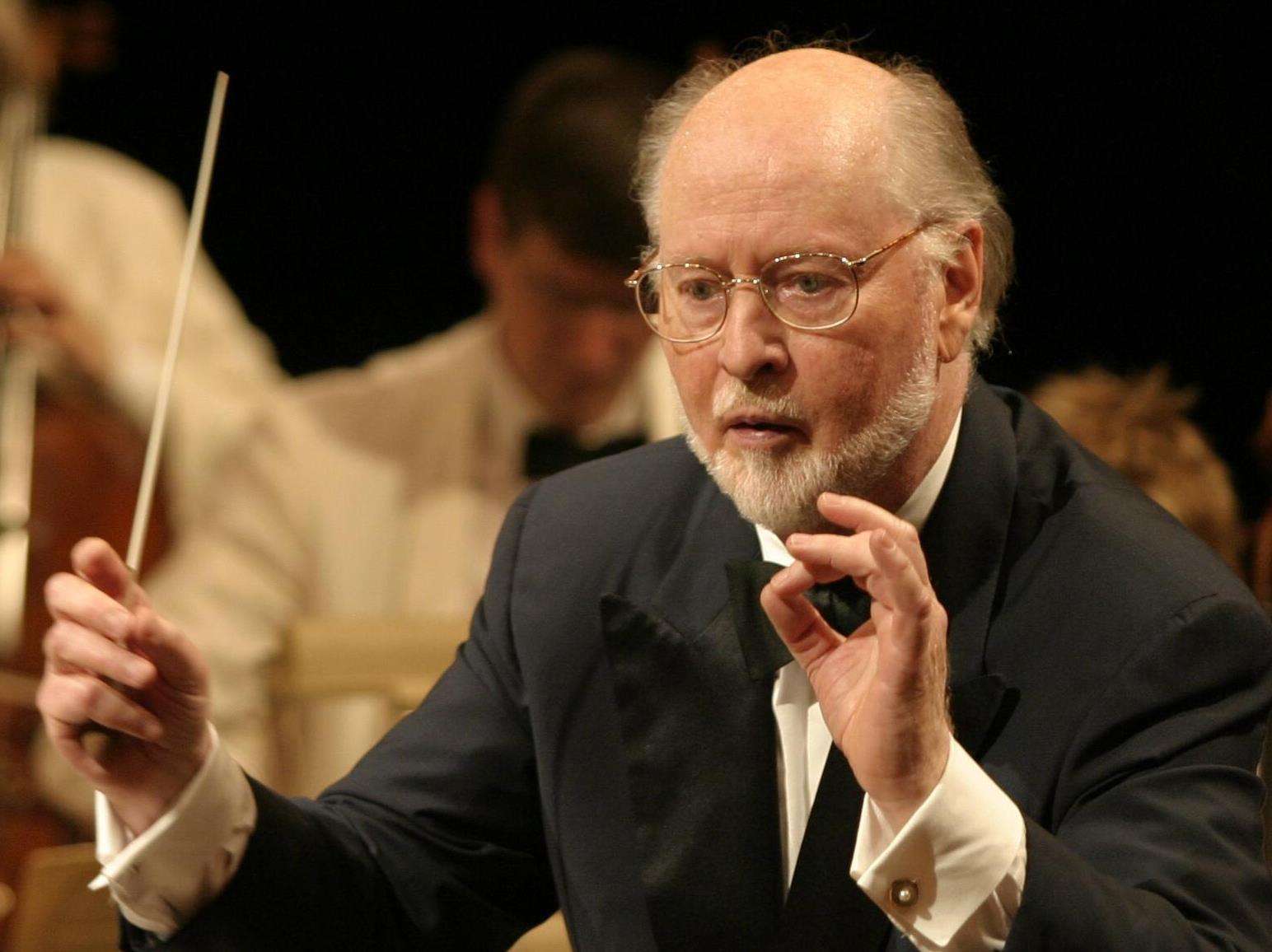
John Williams Composer

John Williams was born on February 8, 1932 in New York City . He studied at Juilliard, filled in as a jazz piano player and studio artist before beginning to create for TV and film. His career began in the 1970s; from that point forward, he has scored more than 100 movies, including Jaws (1975), the Star Wars movies, E.T. (1982) and Schindler's List (1993). Williams has won five Academy Awards and got a record-breaking cluster of nominations.


Video of me Playing


Thursday, May 19, 2016

Brief history

The "sound" of film music really started in the mid 1890's with the "silent" film, when an accompanist in the theater gave piano music as foundation to the picture onscreen. when the new century rolled over, motion picture music turned out to be progressively "diegetic", which means it assumed an onscreen part in the story. Production organizations started to print "cue sheets" for their movies as rules on which style of music ran with a specific scene. By 1911, unique piano music was being composed for particular films, and throughout the following decade, the theater organ made its debut while backup in bigger venues developed to incorporate instrumental gatherings and choruses.

Sunday, April 24, 2016

Film Music Process Journal

Brief Discussion on History of Film Music

The history of music as a backup to visual stimulation is doubtlessly a long one. Without retreating to antiquity, there is all way of theater (musical or non-musical), theatrical presentations and different types of musical show. In these types of theater, music can embrace a scope of parts: now and again it is a characteristic part of the amusement (a gathering of melodies or a musical), and once in a while it is giving a backup to other visual or verbal types of excitement. As a backup music can just "be there" (out of sight), however regularly the music is picked with a specific motivation behind improving the display somehow (making environment) or in a more modern manner to make or upgrade an enthusiastic response among individuals from the gathering of people. This range of musical contribution in the excitement likewise applies to film.

A fragment of film celluloid When it comes to film as a projection through celluloid, the most punctual cases comprised of moving pictures just and no solid. Be that as it may, a quiet film without a musical backup appears to be thoroughly void, so music was ordinarily given in the theater by a performer on piano or organ (or a gathering of artists) to offer accentuation to the story. At first it was up to these theater performers to pick or ad lib the music, however there were music distributers who represented considerable authority in delivering music appropriate for film which these artists could allude to. It wasn't much sooner than producers applied more noteworthy control over the musical backup, by indicating the music to be played, and even now and again having it exceptionally composed for the event. It is intriguing to note as of right now that one of the immense performers of the quiet time, Charlie Chaplin, additionally formed the music for some of his own movies, for example, City Lights.

Process of Creating my Final Piece.


Using my electric piano at home, a MIDI channel (irig) and my phone. I was able to create the piece that is shown with my video. Above, a screenshot of the recorded file is shown. I was unable to play the final piece as it is with the timing and complex nature of it on my own and therefore I used several tools to achieve the process. I first recorded a simple piece with just octaves on the left hand, which I then used in conjunction with garageband, which has a built in tool to turn simple notes into arpeggios. That is the reason that my final piece sounds much more complex than my recording. I also used garageband to fix the timings of my piece. A screenshot below shows the tool that turns octaves in to arpeggios.

Tuesday, April 19, 2016

Classical Era

Classical Era

The Classical period fell between the years of 1750 to 1830. This was one of the greatest territory's of music thus there are numerous arrangers who were and still are popular from the traditional time.

Below is a rundown of composers most famous for the traditional period:


LUDWIG VAN BEETHOVEN

Beethoven was naturally born to an exceptionally musical family and was conceived on the sixteenth of December 1770 and baptized the following day. he was conceived in Bonn of Germany. He first publically performed and played the piano to a crowd of people at ten years old . Beethoven was a trailblazer, opening people groups methods for seeing sonatas, ensemble, concerto and quartet, and finding better approaches for joining vocals with instruments. He is exceptionally known for one of his terrible battles which was deafness, what was astonishing about his deafness was the way that a large portion of his amazing and essential works were made amid the most recent 10 years of his life, when he battled with deafness the most.

A video to a piece of his music.


FRANZ JOSEPH HAYDN 

Haydn was born in Rohrau, Austria on the 31st of March 1732. He was amongst the makers of the diverse key types of established music known today. He had worked with Ludwig Van Beethoven, and Haydn had tremendous impact on Beethoven. as well as had impact on the kind of classification and made pieces out of Schubert, Mendelssohn and Brahms.

A video to his music as well


Tuesday, October 13, 2015

Reflection

My group worked well today and we were able to cover about half of the song.

The roles were as follows:

-Me: Piano
-Ana: Piano
-Leen: Xylophone
-Manoli: Bass

Everybody was able to complete their appropriate tasks.

I tried to lead my group and help them achieve the appropriate goals.c


Music Piece Study:
Moby - Why Does my Heart Feel so Bad? From Play


In the study of this piece you will learn about:
  • Moby and his approach to writing music
  • How ”Why Does My heart Feel So Bad?” is constructed through an analysis of the music
  • Some of the technology commonly used in club dance music

Task:
  • Research equipment used in making of the song
  • Research each item and find out what else they can do
  • Find out alternatives to equipment
  • Find out apps that can be used to manipulate technology-based piece of work


Equipment
Purpose
Yamaha SPX990 Multi-effects Unit
To maniuplate sound tracks
Yamaha Synth Akai s3200 Sampler
Drum loops
Yamaha SY85 and SY22 Synths
Synth sounds
Emu Proformance piano sound module
Piano Sound
Roland Juno 106 Synth
Synth bass 
Roland TR 909 Drum Machine
Drum loops


Notes:

  • Moby created the song using 2 vocal samples from a gospel choir made in 1953
  • Both samples are in the key of A minor but Moby uses harmonisation with a sequence that makes it sound major
  • The equipment can make a much larger variety of sounds
  • There are advancements today in technology tat can allow him to add new and more sounds


Chord Building:

  • To make a basic chord, the following three types of notes are used:, Tonic, Dominant and Sub-Dominant
  • To create a major chord, start with the tonic note, move up 4 semitones, play that then move up 3 semitones and play those three at the same time
  • To create a minor chord, repeat the above process but instead move up 3 the first time then 4 the second time


Chord Letter
Major Chord
Minor Chord
Diminished Chord
F
F,A,C
F,Ab,C
F,Ab,Cb
Bb
Bb,D,F
Bb,Db, F
Bb,Db,Fb
G
G,B,D
G,Bb,D
G,Bb,Db